Unlocking Self-Discovery with 200 Hard Questions Journal Prompts
Journaling has long been a powerful tool for self-reflection, personal growth, and emotional healing. Among the many journaling resources available, 200 Hard Questions Journal Prompts stand out as a comprehensive and structured approach to deep introspection. These prompts are designed to challenge assumptions, explore identity, and uncover hidden truths about oneself. Whether you're an individual seeking clarity or a creator looking to build a product that resonates with others, these prompts offer a unique opportunity for meaningful engagement.
The Power of Deep Reflection Through Journal Prompts
At the core of the 200 Hard Questions Journal Prompts is the idea that true self-discovery requires more than surface-level thinking. Each prompt is crafted to push beyond comfort zones and encourage honest dialogue with oneself. This process can be particularly valuable for professionals, educators, and business owners who need to maintain focus and motivation in fast-paced environments.
For instance, a prompt like “What is one fear that has held you back from achieving your goals?” not only helps identify obstacles but also encourages actionable steps toward overcoming them. This kind of introspection is essential for anyone aiming to improve their mindset, relationships, or emotional well-being.
Exploring Identity and Purpose Through Structured Prompts
One of the most compelling aspects of the 200 Hard Questions Journal Prompts is their ability to help users explore their sense of identity and purpose. By asking questions such as “Who do you want to become in the next five years?” or “What values guide your decisions daily?”, individuals can gain deeper insight into their aspirations and core beliefs.
This structured approach is especially useful for hobbyists and creators who may find it challenging to articulate their creative vision. By using these prompts, they can refine their ideas and align their projects with their authentic selves. For example, an artist might use a prompt like “What emotions do I want my work to evoke?” to better understand their creative intent.
Practical Applications of 200 Hard Questions Journal Prompts
The versatility of 200 Hard Questions Journal Prompts makes them applicable across various domains. Educators can use them to foster critical thinking among students, while researchers might leverage them to explore psychological or sociological themes. Business owners, on the other hand, can apply these prompts to enhance team dynamics and leadership strategies.
Consider a scenario where a manager uses a prompt like “What is one habit that could improve our team's productivity?” This not only encourages reflection but also promotes collaborative problem-solving. Similarly, a researcher studying human behavior might use prompts related to emotions and healing to design more effective interventions.
Designing and Customizing Journal Templates with Canva
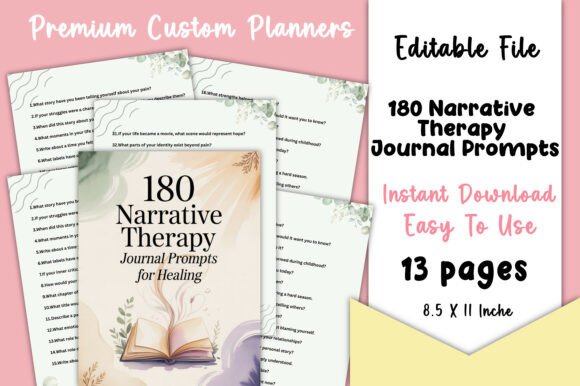
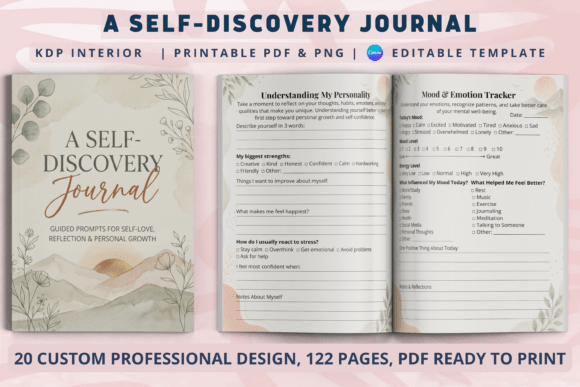
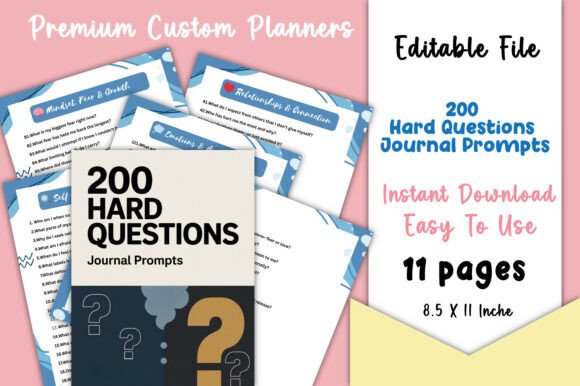
One of the standout features of the 200 Hard Questions Journal Prompts is their compatibility with Canva. Users can access editable templates that allow for customization in terms of text, colors, fonts, and layout styles. This flexibility is ideal for those who want to tailor their journal experience to match their personal preferences or brand identity.
For creators and entrepreneurs, this means they can design visually appealing journals that reflect their unique style. A designer, for instance, might choose a minimalist layout with bold typography, while a teacher might opt for a more colorful and engaging format suitable for students. The ability to export files in various formats—such as PDF, JPG, and PNG—makes it easy to share or print the journal for personal or professional use.
Enhancing Relationships and Emotional Intelligence
Another significant benefit of the 200 Hard Questions Journal Prompts is their potential to strengthen relationships. By reflecting on topics such as communication patterns, trust, and emotional needs, individuals can develop greater empathy and understanding. This is particularly valuable for those in romantic relationships, friendships, or professional settings where collaboration is key.
A prompt like “What is one thing you wish your partner understood about you?” can lead to meaningful conversations and deeper connections. Similarly, a business owner might use a prompt such as “How can I improve my communication with my team?” to enhance workplace dynamics and overall performance.
Supporting Mental Health and Healing
In today’s fast-paced world, mental health has become a growing concern. The 200 Hard Questions Journal Prompts provide a safe space for individuals to explore their emotions and work through challenges. By addressing issues such as anxiety, grief, and self-doubt, these prompts can serve as a valuable tool for emotional healing.
For example, a person dealing with grief might use a prompt like “What memories bring me comfort during difficult times?” to process their emotions in a constructive way. Similarly, someone struggling with anxiety might reflect on questions like “What triggers my stress, and how can I manage it effectively?” to develop coping strategies.
Creating a Personalized Journal Experience
With the ability to edit and customize the 200 Hard Questions Journal Prompts on Canva, users can create a journal that feels uniquely theirs. This level of personalization enhances the overall experience and makes the journal more engaging over time. Whether it's adjusting the font size for readability or adding images that resonate with personal experiences, every detail contributes to a more meaningful journey of self-discovery.
Additionally, the inclusion of an intro page and KDP-tested formatting ensures that the final product is both aesthetically pleasing and functional. This makes it an excellent choice for those who plan to publish their own journal or use it as part of a larger project.
Expanding the Use of Journal Prompts Beyond Individual Practice
While the 200 Hard Questions Journal Prompts are primarily designed for personal reflection, they can also be used in group settings. Educators, coaches, and therapists often incorporate these prompts into workshops or sessions to facilitate discussions and promote collective learning. In a classroom setting, for instance, a teacher might use prompts related to identity and purpose to spark thoughtful debates among students.
Similarly, in a corporate environment, team-building exercises can benefit from these prompts by encouraging employees to reflect on their roles, goals, and contributions. This not only fosters a sense of belonging but also helps individuals align their personal ambitions with organizational objectives.